
From Lisbon to Venice: Giulia Sent sets off today on an oceanographic sailing expedition
MARE researcher transforms her sailboat into a floating laboratory and sets off today towards her hometown, collecting plankton samples for a project funded by NASA and the European Space Agency.
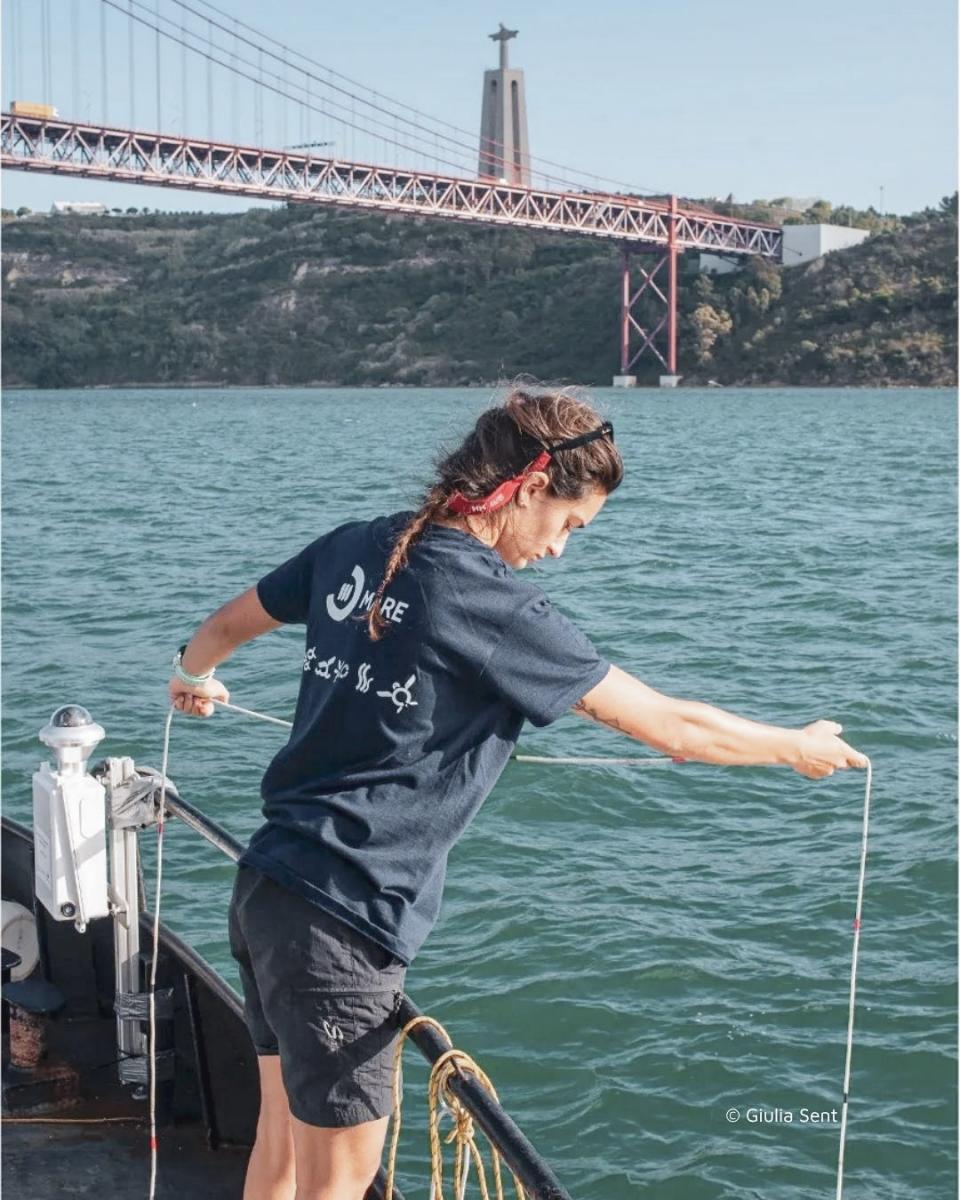
Some dreams are planned on solid ground. Giulia Sent's always belonged to the sea. Today, the MARE | ARNET researcher and PhD candidate at the Faculty of Sciences of the University of Lisbon departs from Lisbon aboard the Sar, her 1973 sailboat that is also her home, on a two-month voyage to Venice, the city where she grew up in Italy. But this time, the return home is also a scientific expedition.
Born and raised in Murano, a small island in the Venice lagoon, Giulia came to Lisbon for a six-month Erasmus internship. Eight years later, she is still here, living aboard a classic sailboat moored at Lisbon marina and completing a doctorate in remote sensing for the monitoring of coastal aquatic ecosystems. The journey that begins today is not merely a homecoming: it is the start of the Becoming R/V project, a personal and scientific mission to transform the Sara into a true research vessel.
The Sara is a 1973 Hallberg-Rassy Mistral with a story of its own: when Giulia was born in 1993, the sailboat had already been sailing for twenty years. Today, it is her home, her workshop, and her greatest teacher. Giulia admits that when she first met it, she thought about renaming it Chaos, a reflection, she says, of how her life unfolds. But "its personality was too strong, and it is 20 years older than me," Giulia writes on her blog. "Who am I to change its name?"
The sailboat was selected to join the PlanktoSpace programme, an initiative funded by NASA and the European Space Agency that recruits civilian vessels to collect plankton samples from the ocean. The goal is to correlate the biological composition of surface waters with the colour of the ocean as captured by satellite, paving the way for a global biodiversity monitoring system in which the citizen is the lead researcher. The Sara is one of twenty vessels selected worldwide for this mission, and Giulia's inclusion was no coincidence, given her research focus at MARE on marine remote sensing.
Throughout the voyage, Giulia will use a Plankto-Kit on board, a miniature laboratory equipped with a plankton net, a filtration unit, and a microscope for observing and photographing plankton in real time at sea. The protocol takes around three hours per session, but it is entirely fitting for a researcher who dedicates her work to satellite monitoring of aquatic ecosystems.
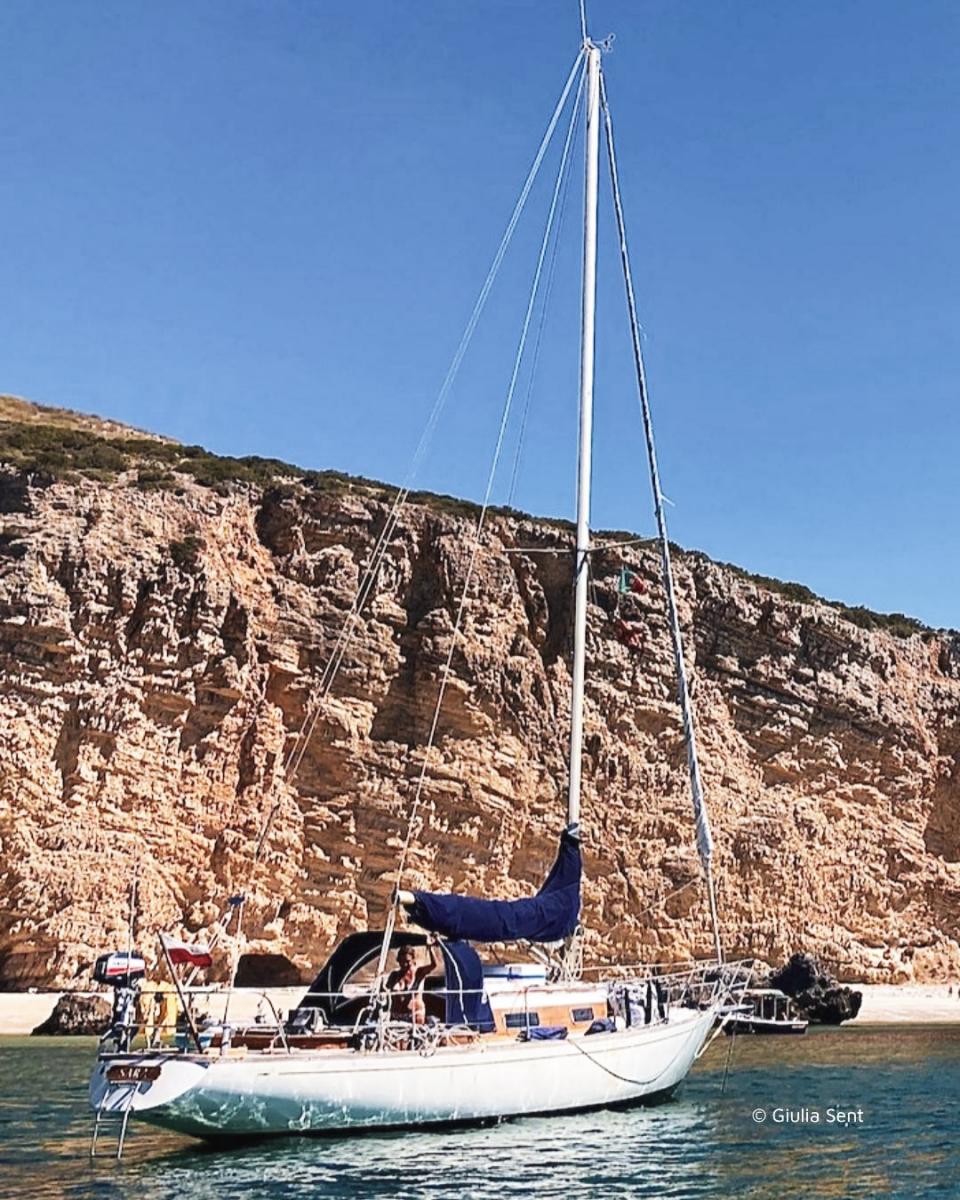
The route will not be decided by wind alone. She plans to be guided by satellite images showing the distribution of plankton along the way, sailing in pursuit of samples. "When I say I'm chasing plankton, I mean it literally," Giulia writes on her blog. The significance of the project has not gone unnoticed: it has been recognised as an official activity of the United Nations Ocean Decade, the global programme bringing together scientific efforts to halt ocean degradation by 2030.
The voyage will take place mostly along the coast, largely solo, with friends and family joining on board at various points along the way. There will be stops at several ports, mainly in Italy, where Giulia will hold public outreach sessions on ocean literacy and the importance of marine ecosystem monitoring.
But before reaching the Mediterranean, there is an unpredictable obstacle to navigate: "If the orcas decide my rudder isn't worth their time," Giulia writes on her blog, "I should be in the Mediterranean less than a week after departure", a good-humoured reference to the increasingly frequent behaviour of groups of orcas that have been interacting with vessels off the Portuguese coast and in the Strait of Gibraltar.
The research is carried out voluntarily. To equip the Sara with the necessary instruments and ensure that a half-century-old vessel is up to the task, Giulia has launched a crowdfunding campaign on GoFundMe, where anyone can contribute to this low-impact floating laboratory. The project page, Becoming R/V, will feature regular updates on the voyage, including a real-time tracker.
At MARE, we are privileged to have Giulia on our team. Her ability to turn a personal dream into a genuine contribution to ocean science truly embodies the spirit that drives us.
Fair winds, Giulia — and may the Sara carry you safely to port!
Photos: Giulia Sent
Text by: Vera Sequeira