
MARE represented at the Antarctic Treaty Consultative Meetings
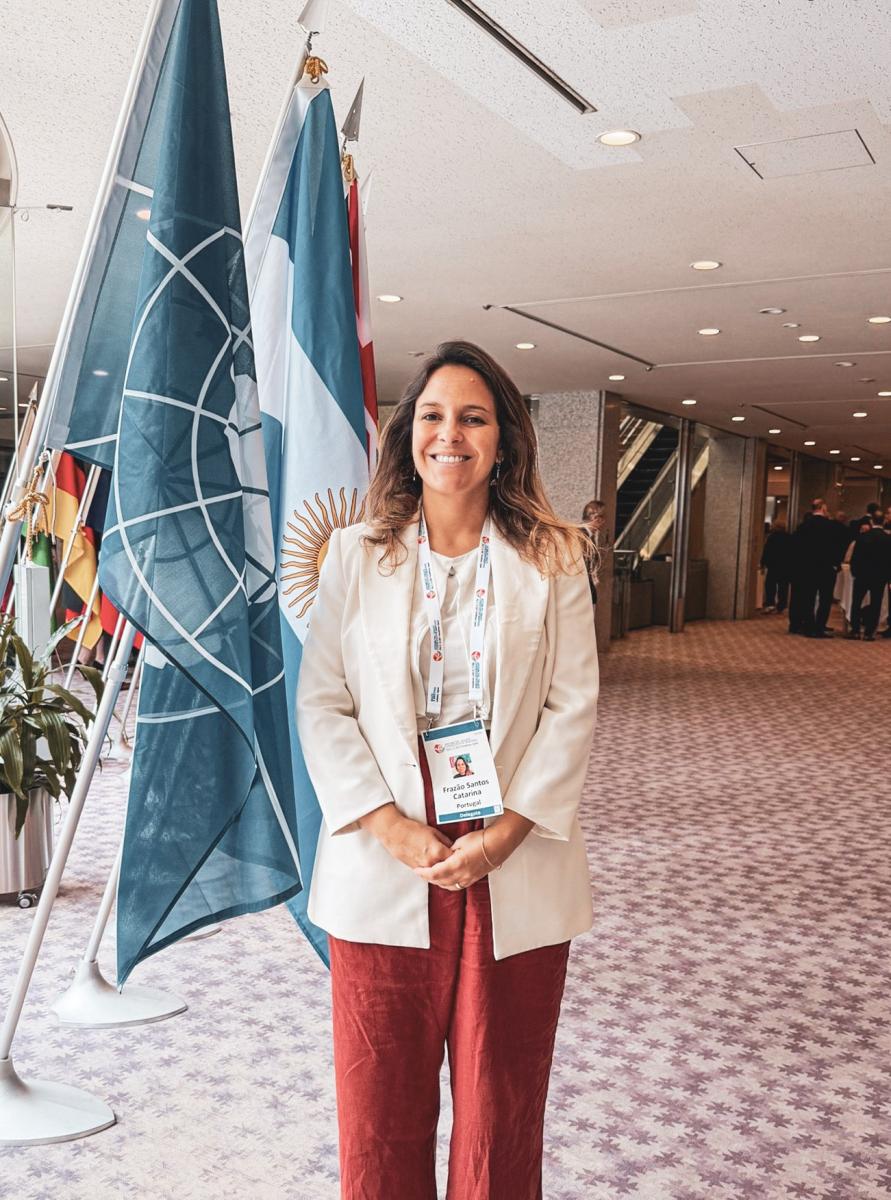
Researcher Catarina Frazão Santos, from MARE/ARNET, represented Portugal for the second time at the Antarctic Treaty Consultative Meetings, which brought together more than 400 delegates from 58 countries in Hiroshima between 11 and 21 May 2026.
At the centre of the Portuguese delegation’s participation was the presentation of document IP-146, “Towards a climate-smart pathway for ocean management in Antarctica”, prepared in collaboration with Canada and France במסגרת the PLAnT project. The document demonstrates how participatory mapping tools can support a more adaptive and climate-resilient approach to marine spatial management, based on studies published in the journals Science (2024) and Nature Reviews Biodiversity (2026).
On 14 May, during the 28th Meeting of the Committee for Environmental Protection, Catarina Frazão Santos argued that these tools can complement existing mechanisms such as Antarctic Specially Protected Areas (ASPAs) and Marine Protected Areas (MPAs), encouraging member states to integrate them into their management strategies. Portugal also announced a symposium dedicated to the topic at the SCAR Open Science Conference 2026, to be held in Oslo in August, coordinated by the researcher.
“One thing is producing scientific knowledge on a topic; another, very different thing, is seeing how that knowledge can be translated into a political context, understanding the opportunities that exist and the challenges it faces. It is a real reality check,” the researcher explains.
In 2024 and 2025, the PLAnT project had already contributed to the consultative sessions through the results presented in two documents: IP 167, “Marine spatial planning for a sustainable and climate-resilient Antarctic Ocean (ATCMXLVI)”, and IP 64, “Towards climate-smart marine spatial planning in the Antarctic Ocean (ATCMXLVII)”. “This participation also strengthens the link between science and international policy, ensuring that the PLAnT project continues to generate scientific information that is relevant to decision-making processes in Antarctica,” emphasises Catarina Frazão Santos.
About the Antarctic Treaty
The Antarctic Treaty was signed in Washington on 1 December 1959 by representatives of the 12 countries active in the region at the time. Today, 58 member states are committed to free and cooperative scientific research on the continent, ensuring peaceful activities, environmental protection of Antarctica and its ecosystems, as well as coordinated management and joint planning of the territory.
About PLAnT
The PLAnT project is funded by the European Research Council, began in 2024 and will run for four years. Led by Catarina Frazão Santos, PLAnT has made significant progress in applying participatory mapping to marine spatial planning capable of adapting and responding to climate change, enabling an intelligent and holistic management approach that may in future be applied to other regions of the globe.